


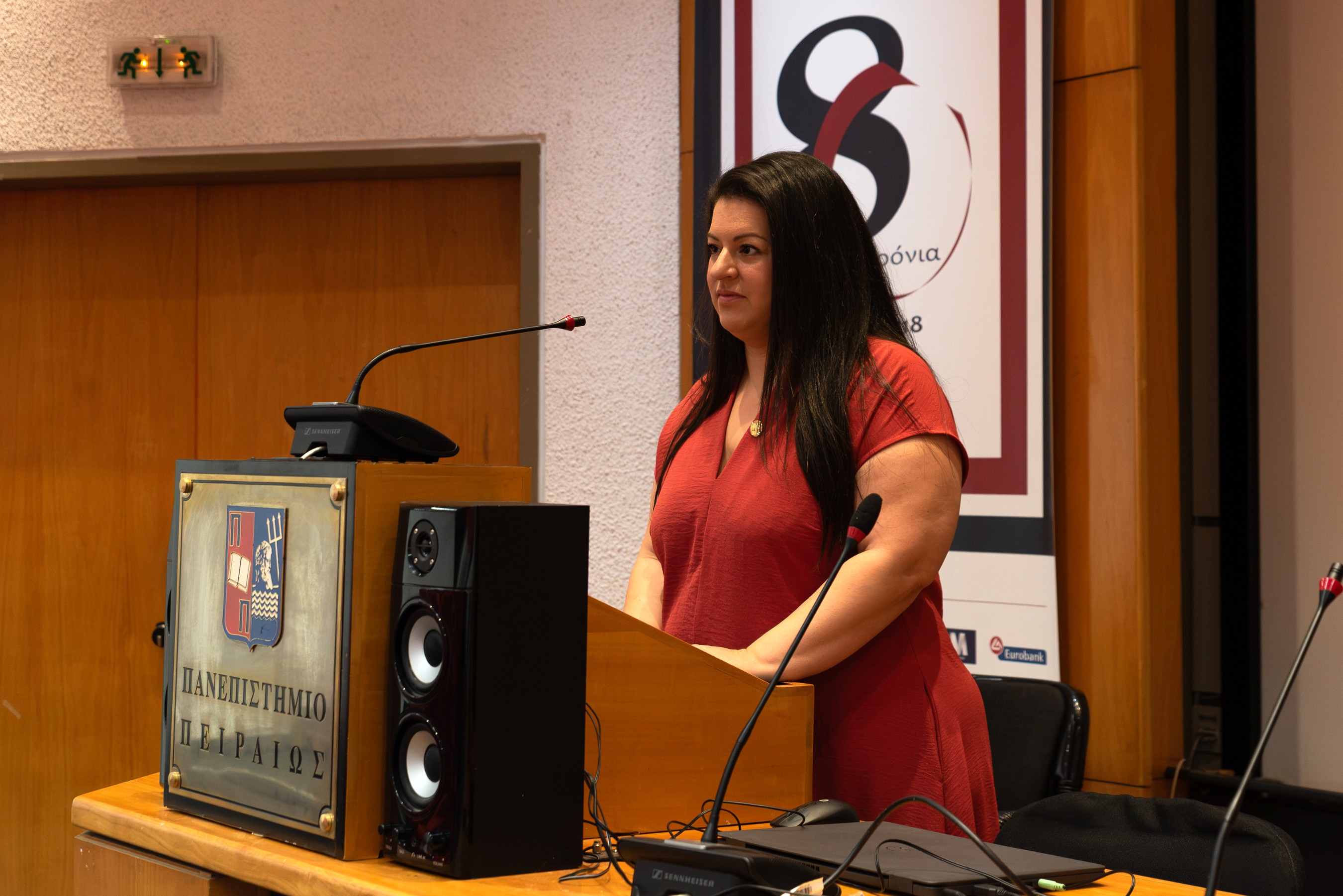
The University of Piraeus welcomed academics, tourism professionals, business leaders, industry representatives and students to a conference on "Employment Conditions and Fair Work in Greek Tourism." The University organised the event together with the University of Strathclyde, Bournemouth University, Nottingham Trent University and Manchester Metropolitan University, with the support of the University of Piraeus Research Centre and under the auspices of the Global Hospitality Research Alliance.
The conference brought academic research into direct dialogue with the realities of the tourism labour market and highlighted the importance of fair and sustainable employment for the future of Greek tourism. Researchers presented the findings of an international research project on employment conditions in tourism, focusing on the hospitality and food service sectors in Greece.
Professor Nikolaos Georgopoulos, Dean of the School of Economics, Business and International Studies at the University of Piraeus, opened the conference by stressing the importance of creating high-quality employment opportunities and strengthening cooperation between universities and tourism stakeholders to support the sector's sustainable development.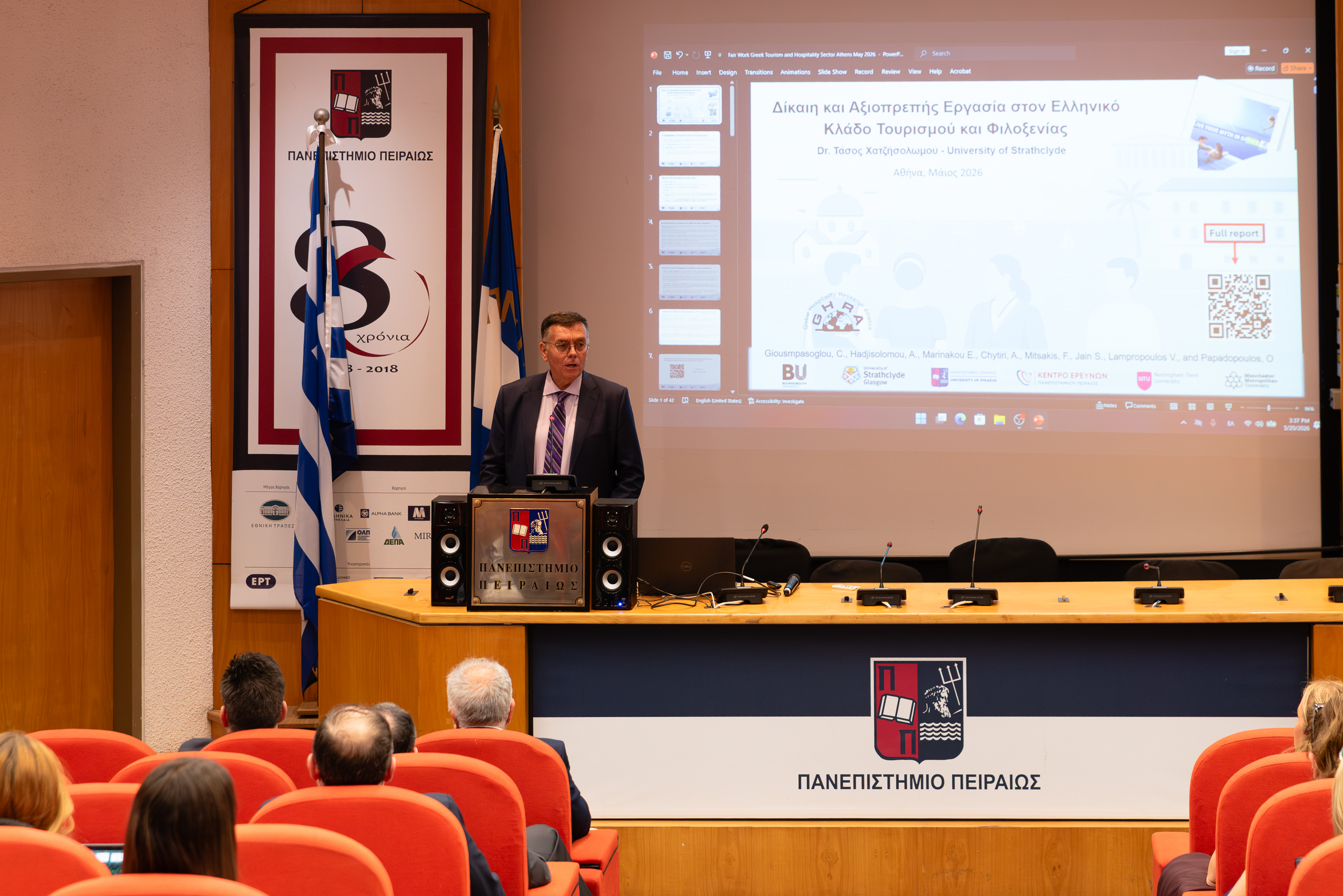
Professor Petros Maravelakis, Chair of the Department of Tourism Studies, emphasised that fair work and investment in tourism professionals are essential for the future of Greek tourism. Georgios Pelekanakis, President of PODIX, addressed the conference, highlighting the challenges facing the hotel industry and the need to improve both the quality and sustainability of working conditions throughout the sector.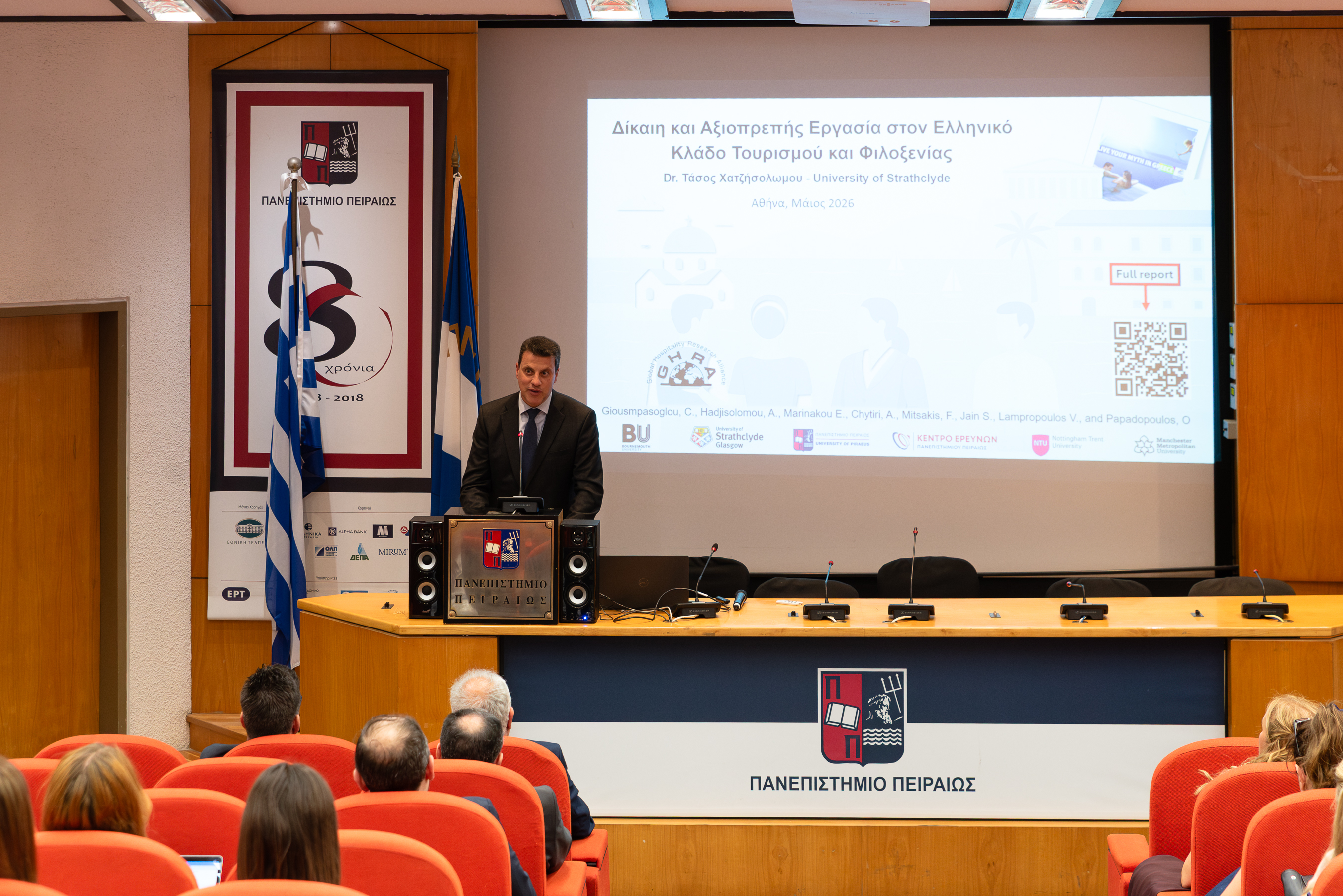
The authors of the study presented the research findings alongside members of the international research team from the partner universities in the United Kingdom and the University of Piraeus. The speakers included Dr Anastasios Hatzisolomou (University of Strathclyde), Dr Charalampos Yousbasoglou and Dr Evangelia Marinakou (Bournemouth University), and Dr Alexandra-Paraskevi Chytiri (University of Piraeus).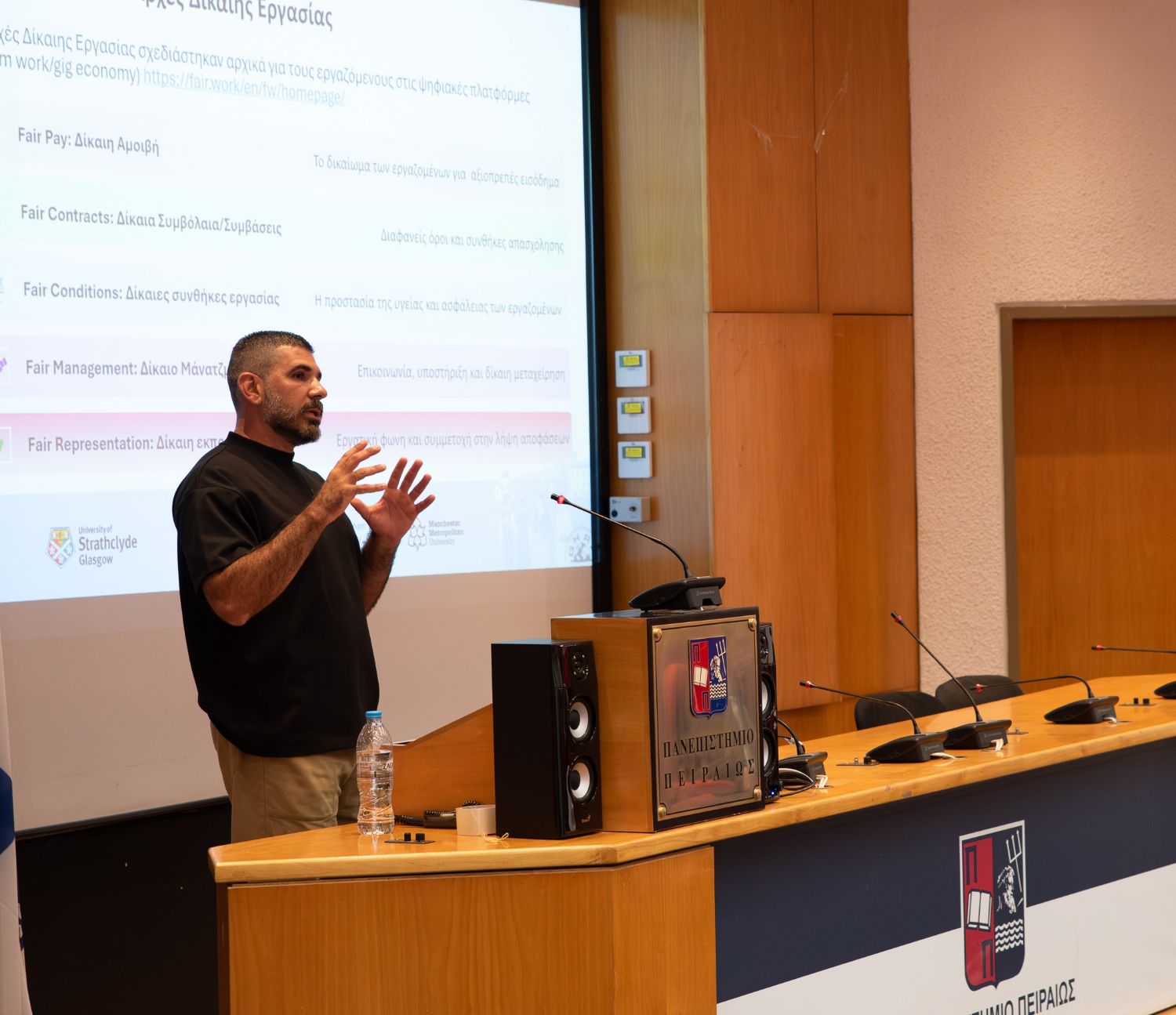
The research paints a nuanced picture of the Greek tourism industry. Well-organised workplaces and examples of good practice coexist with persistent challenges related to workload, seasonality, job security and employees' everyday working experience. The study also highlights the need to strengthen employee protection and well-being while investing in human capital as a cornerstone of sustainable tourism development.
Overall, the findings suggest that the sector has made encouraging progress in adopting fair work principles. At the same time, the research reveals a more complex reality. Although tourism remains one of Greece's most strategically important industries, employment conditions continue to face significant structural weaknesses. Long-standing challenges—including low pay, informal employment practices and insecure working arrangements—continue to fuel labour shortages and high staff turnover.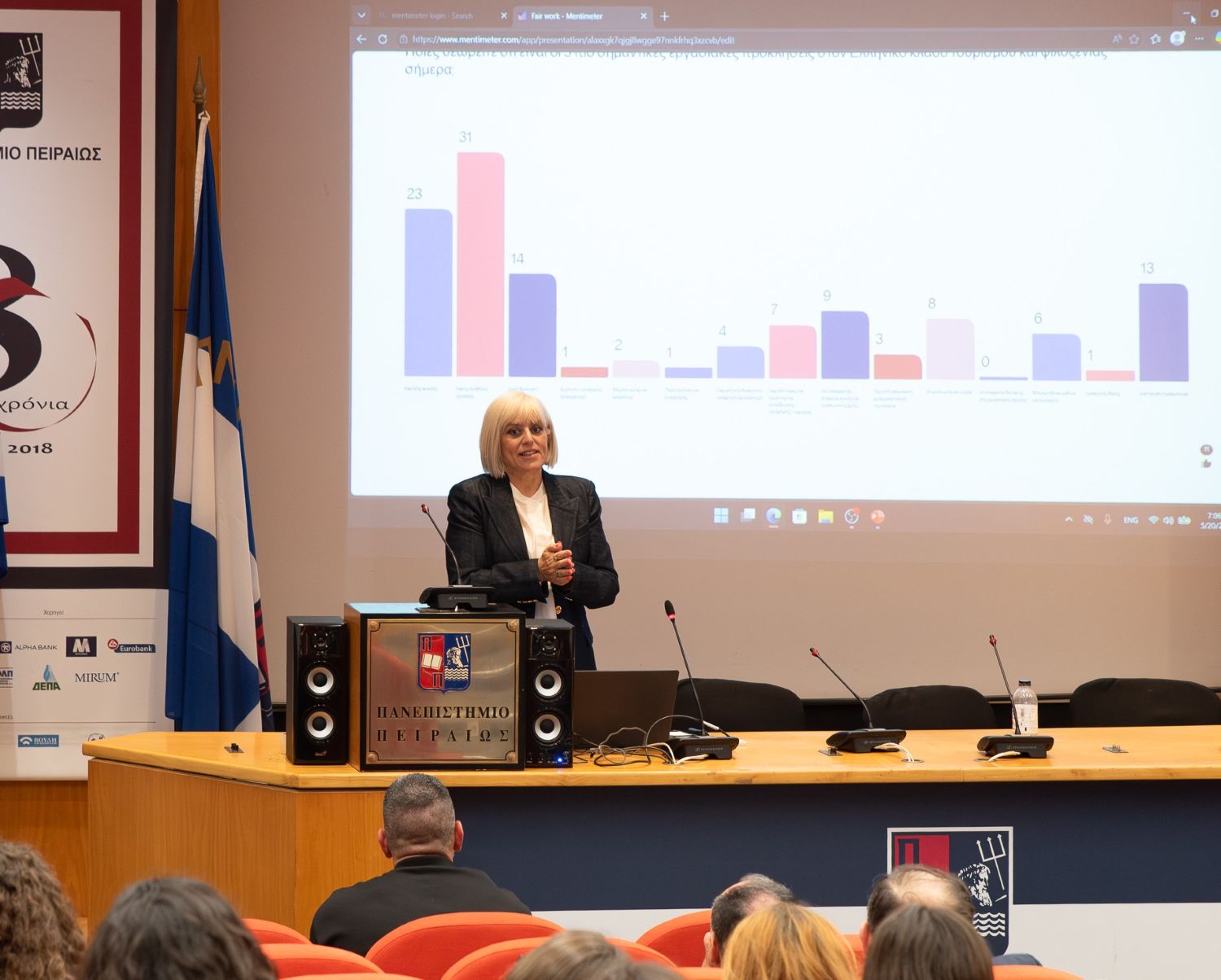
The conference also explored fair working conditions, fair contracts, fair pay, employee representation, fair management practices and the broader challenges facing the tourism industry. The presentations prompted a lively discussion among academics, business leaders and representatives of professional organisations.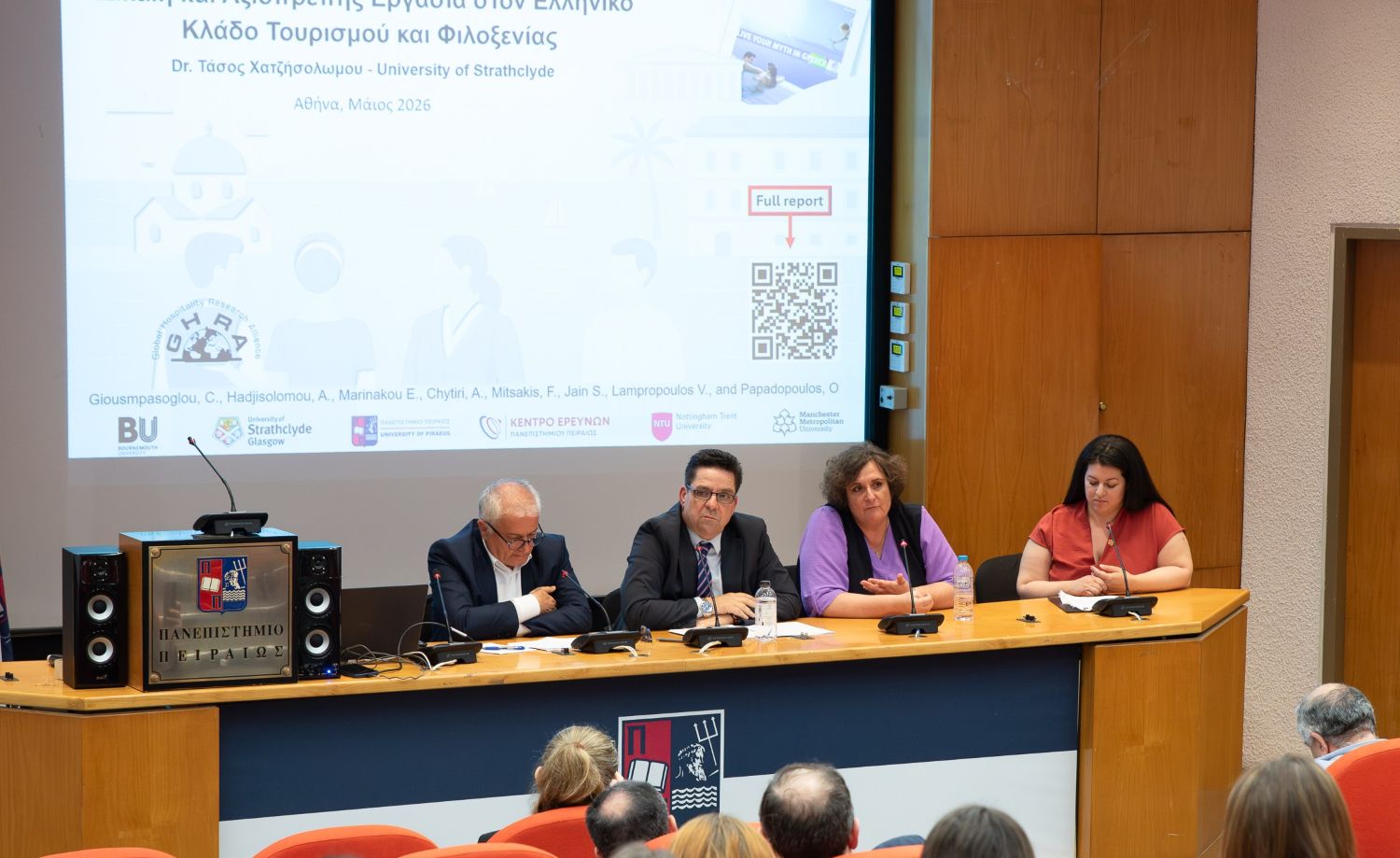
Participants agreed that Greek tourism needs a more resilient, sustainable and people-centred employment model—one that balances the competitiveness of the industry with decent, high-quality working conditions. They also underlined that stronger collaboration between universities, businesses and institutional stakeholders will play a decisive role in addressing the sector's future challenges.
The conference concluded on a highly positive note, reflecting the growing commitment of both the academic community and the tourism industry to shaping the future of work in Greek tourism.
Read the main findings of the research: http://dx.doi.org/10.18746/k163-zr88